
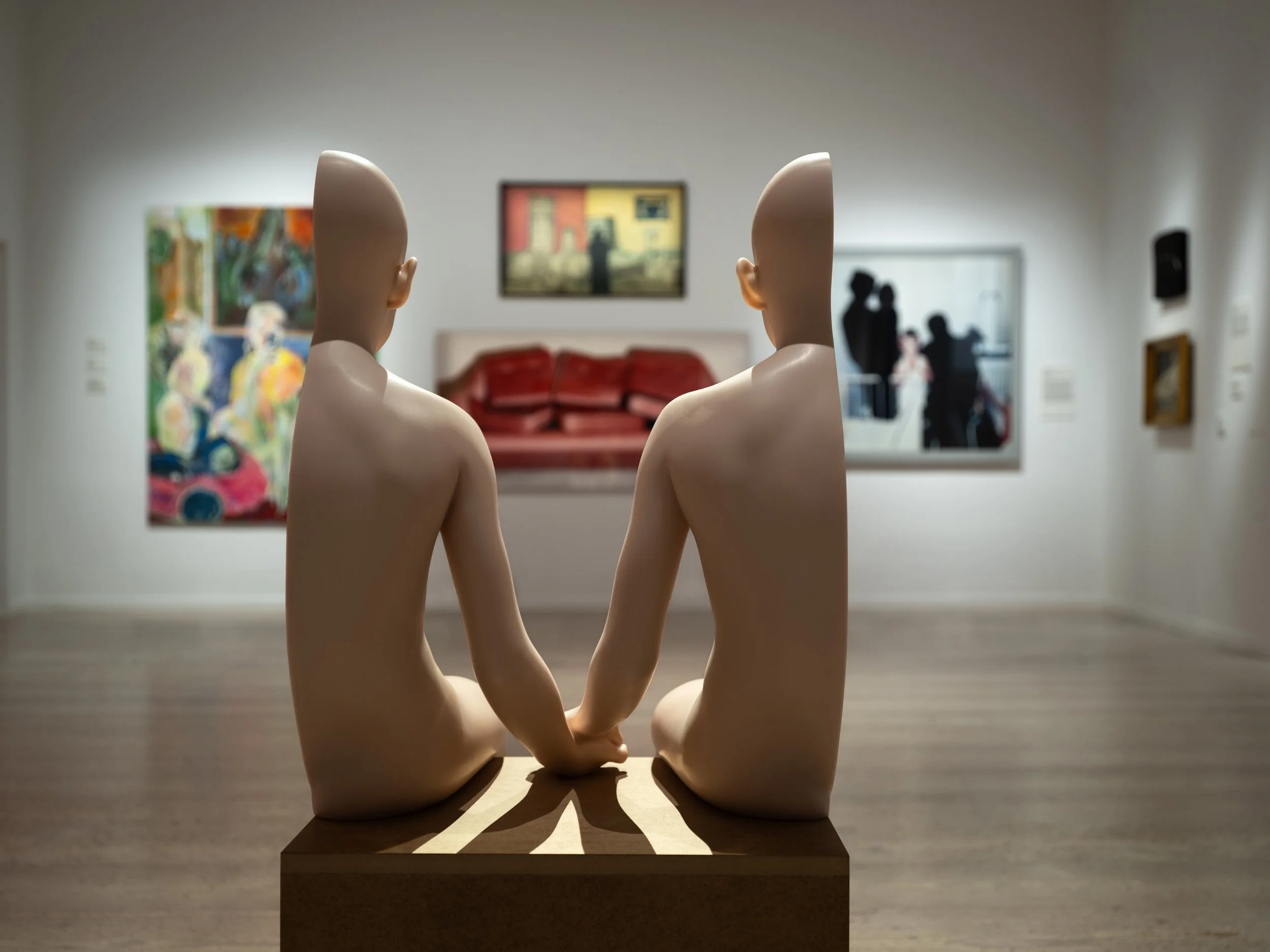
Photo: Mattias Lindbäck
On 23 April, psychologist Camilla von Below will visit Sven-Harry's Art Museum (Sven-Harrys Konstmuseum) for a conversation with museum director Dragana Kusoffsky Maksimovic. Taking Lena Cronqvist's Modern (The Mother) as their starting point, they will discuss attachment and relationships between family members. Camilla von Below has previously published the book Anknytning i relationer (Attachment in Relationships).
The talk is included in the admission price.
Familjen – på gott och ont (Family – For Better or Worse) runs from 27 March to 13 September 2026.
Read more: https://sven-harrys.se/event/modern-konst-psykologi-och-familjerelationer/
Sven-Harrys Art Museum at the edge of Vasaparken in Stockholm is a golden house filled with art, design and fashion. An experience in both form and content. It is called the Gold House after its gold-clad façade, is designed by Wingårdh Arkitektkontor and is one of Stockholm’s landmarks. Here exhibitions are made that have become well-known for their way of reflecting and challenging both our surrounding world and ourselves. Innovative and engaging. At the very top of the house there is a meticulously built copy of the founder Sven-Harry Karlssons former home Ekholmsnäs on Lidingö. The 18th-century manor is rebuilt with detailed precision, furnished with one of the Nordic region’s largest private art collections where great names such as Carl Fredrik Hill, Edvard Munch, Ernst Josephson, Helene Schjerfbeck, August Strindberg, Gio Ponti and Märta Måås-Fjetterström are included. On the roof there is a unique terrace with a view over Stockholm and a sculpture park with works by artists such as Olle Baertling, Marja Leena Sillanpää, Carl Fredrik Reuterswärd and Lena Cronqvist.